
An online store for a cultural center isn’t a normal store with nice products: it’s a catalog with meaning, international sales almost by default and a non-technical team that has to be able to run it on its own. We learned all of that building the store for the Centro Federico García Lorca in Granada, Spain — tiendalorca.es — and this article tells how. At Mister Mikel we build online stores for publishers, bookshops, foundations and cultural centers from Vitoria-Gasteiz, Spain, and this project sums up better than any argument why we do it the way we do.
The starting point
The Centro Federico García Lorca has one of the most distinctive cultural merchandise collections in Spain: T-shirts, notebooks, fans, tote bags — all bearing the poet’s stamp. They had the product, they had the audience and they had the brand. What they didn’t have was an online store.
And they had a clear requirement from day one, the one that defines everything else: they wanted to be able to manage it themselves. Changing a price, adding a product, launching the season’s new items — without depending on anyone, without calling an agency, without waiting.
That requirement, which sounds logistical, is actually the most important design decision in the project.
The decisions that mattered
We built the store from scratch on Shopify, and along the way we made the decisions we now apply to every cultural project:
Catalog by collection, not by product type. The temptation was to organize it like a bazaar: T-shirts on one side, stationery on the other. But a cultural catalog is explored by meaning, not by format — collections group what tells the same story, and the visitor browses like someone walking through an exhibition.
Product pages that say more than the measurements. A T-shirt with a screen-printed verse doesn’t compete with a chain-store T-shirt; it competes on meaning. If the product page only says size and composition, you’ve thrown away the only advantage you had. We worked on the product pages so they would tell where each piece comes from.
International by design, not as a patch. Lorca’s audience doesn’t end in Spain — the store was prepared to sell in several markets, including sales in dollars. For a cultural institution with an international reach, multi-currency isn’t an extra: it’s a part of the audience that, without it, looks and leaves.
An admin panel anyone can handle. There was one handover criterion: that anyone on the team could add a product without technical training. We achieved it, and since then the store has been run by their team.
What we learned (and apply to every cultural project)
The transferable lessons, in plain terms:
- Self-management is decided at the start, not at the end. An “easy to use” store doesn’t happen by accident: every structural decision is made thinking about who will touch it afterwards.
- Cultural products sell with context. A product page with no story, a product with no advantage.
- Collections are the map. A cultural catalog is organized the way the institution’s narrative is organized, not like a warehouse.
- International is prepared even if it doesn’t launch on day one. Changing your mind later costs three times as much.
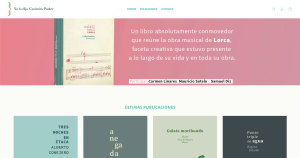
- A big institution doesn’t mean an impossible project. And a small imprint doesn’t mean a toy store: the same method worked for Ya lo dijo Casimiro Parker, an independent publisher in Madrid with more than a hundred titles. Two extremes, the same logic.
Does this work for my foundation / museum / bookshop?
If your project sells things with meaning — publications, cultural merchandise, tickets to activities — and your team isn’t technical, yes: it’s exactly the case we work for. Plans range from €2,970 to €6,860 + VAT depending on catalog, languages and international scope; the details are on our page about online stores for publishers and cultural projects and the price breakdown is in how much does an online store for a publisher cost.
If what you sell is mostly books, we build the store on Parker, our Shopify theme for publishers and bookshops. If your center also sells courses, art or music, there’s Parker Open. Both are free if you install them yourself.
And if your doubt comes earlier — whether it’s even worth leaving the marketplace or manual selling — start with how to sell books online without depending on Amazon.
FAQ
Three things: the catalog is organized by meaning (collections that tell a story, not warehouse categories), product pages need context because the product is bought for what it represents, and international sales tend to matter from the start. And a fourth that cuts across all of them: the team managing it is usually not technical, so the store has to be runnable without training.
Yes, if the store is built with that criterion from the design stage. In the case of the Centro Federico García Lorca, the requirement was that anyone on the team could add a product or change a price without technical training, and that’s how it has worked since handover.
Yes. Languages, currencies and shipping zones are configured according to the project’s markets. The Centro Lorca store, for example, also sells in dollars.
Our plans range from €2,970 to €6,860 + VAT: from a simple catalog in one language to international sales with multi-currency, migration of large catalogs and a members’ area. If there’s a grant or subsidy involved, we adapt the project’s scope to what it covers.
Yes, from the same platform: books, publications, merchandise, and tickets to launches or activities as one more product, with their confirmation and attendee list. Without sending your audience to an external platform.
In short
A cultural center’s online store comes down to three decisions: catalog by collection, product pages with context and self-management by the team from day one — with international prepared even if it doesn’t launch on the first day. It’s what we learned building tiendalorca.es for the Centro Federico García Lorca, and the same method works from the independent imprint to the large institution.