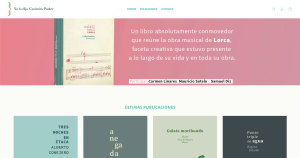

Digital books already account for 5.6% of the Spanish publishing sector’s revenue (€174.39 million in 2025, 5.3% more than the previous year), according to the preliminary Domestic Book Trade Report from the Federación de Gremios de Editores (FGEE), Spain’s publishers’ federation. And bookshops account for 60.6% of sales, which leaves almost 40% of the market outside them. Selling books online has its own vocabulary, half from the book trade and half from ecommerce. This glossary brings together the twenty concepts you need to understand before opening (or fixing) a publisher’s online store, with Spain as the example.
Quick summary
| Concept | In one sentence |
|---|---|
| Fixed book price | The publisher sets the retail price and nobody can lower it by more than 5%, not on the web either |
| Print run | Copies printed of an edition; the average in Spain is 3,374 |
| Preorder | Selling the book before printing it to match the print run to real orders |
| ISBN | 13-digit code that identifies each edition; essential on the book page |
| Metadata | The book’s data (title, author, ISBN, subject, synopsis) that feed the book page |
| DILVE | Metadata database for Spanish books, managed by the FGEE |
| Distributor | Intermediary that gets the book to bookshops in exchange for a percentage of the retail price |
| Sale or return | System by which the bookshop returns what it doesn’t sell |
| Backlist and new releases | What has been in the catalog for a while versus what has just come out |
| Remainders | Books that leave the fixed price once the periods set by law have passed |
| Ebook and DRM | Digital book and the system that limits copying it |
| POD | Print on demand: it’s printed when someone buys it |
| Pack or bundle | Several books sold together at a combined price |
| Product page | A book’s page in the store; the most important of all |
| Collection | A grouping of books that works as a category in the store |
| Payment gateway | The service that charges the card, Bizum or PayPal |
| VAT on books | 4%, print and digital |
| Flat-rate shipping | A fixed shipping price regardless of weight or order amount |
| Import CSV | File used to upload hundreds of books at once |
| Direct sales | Selling from the publisher’s website with no distributor or bookshop |
The book and its catalog
Fixed book price
In Spain the retail price of a book is set by the publisher and is the same at any point of sale. This is established by Ley 10/2007, the law on reading, books and libraries, which allows a maximum discount of 5% to the public (and 10% on Book Day and at book fairs). It applies the same in a physical bookshop as in an online store. In the store this means a 15% coupon on new releases is illegal even if the platform lets you create it.
Print run
The print run is the number of copies printed of an edition. According to the FGEE, the average print run on paper in Spain fell in 2025 to 3,374 copies per title, 4.1% less than the previous year. In the store this means every direct sale weighs more: with short print runs, the margin on a book sold without intermediaries can be double that of one sold in a bookshop.
Preorder
A preorder is the sale of a book before it physically exists, with an announced delivery date. It serves to get paid before printing and to match the print run to real demand instead of estimating it. In the store it’s set up as a normal product with an availability date and a clear notice of when it ships. We explain it in depth in Book preorders: how to fund a print run before printing.
ISBN
The ISBN (International Standard Book Number) is the 13-digit code that identifies a specific edition of a book: the same title in hardcover, paperback and ebook has three different ISBNs. In Spain it’s managed by the Agencia del ISBN. In the store it must appear on each book’s page, because it’s what search engines, comparison sites and libraries use to identify it.
Metadata
Metadata is all the information that describes a book: title, subtitle, author, ISBN, publisher, collection, subject, page count, format, publication date, retail price and synopsis. It’s the raw material of the product page. In the store, complete and consistent metadata is the difference between uploading 300 titles in an afternoon or in three weeks.
DILVE
DILVE is the platform for distributing information on Spanish books, managed by the FGEE, where publishers register their titles’ metadata so it reaches bookshops, distributors and platforms. In the store, if the publisher already feeds DILVE, that file is the starting point for importing the catalog without retyping anything.
Distributor
The distributor is the company that stores the publisher’s books, supplies them to bookshops and manages payments and returns. In exchange it keeps a percentage of the retail price which, added to the bookshop’s, usually exceeds half the price. In the store this means direct sales leave the publisher a much higher margin, but also that you have to decide what is sold on the web and what is left to the trade channel.
Sale or return
Sale or return is the system by which the bookshop receives books without buying them outright and returns the ones it doesn’t sell, usually after a few months. The return is that flow back, which the publisher receives as copies (sometimes damaged) and not as money. In the store it doesn’t exist: a book sold online is paid for and doesn’t come back, except when the buyer withdraws within 14 days.
Backlist and new releases
A new release is the recently published book, the one that occupies the bookshop table for a few weeks. The backlist is everything else: the titles that have been in the catalog for a while and keep selling little by little. In the store, the backlist is the big opportunity: bookshops don’t have room for it, and the web does. Many publishers sell online mostly what’s no longer on the tables.
Remainders
A book becomes a remainder when the publisher decides to take it out of the fixed price, something Spanish law allows once certain periods have passed since its publication and since the last supply. From then on the price is free. In the store, remainders are the only legal way to offer big discounts on books, and a well-made remainders section sells.
The digital book
Ebook and DRM
An ebook is a book in digital format, usually EPUB or PDF. DRM (Digital Rights Management) is the system that limits copying it: “hard” DRM (Adobe-style) requires an app and an account to read it; social DRM or watermarking simply includes the buyer’s details in the file. In the store, selling your own ebooks with a watermark is simpler and causes the reader fewer problems; we cover it in How to sell ebooks from your own website.
POD (print on demand)
Print on demand means printing a copy only when someone buys it, with no prior print run or warehouse. It costs more per unit than a print run, but it eliminates stock risk. In the store it lets you keep the whole backlist alive without a single copy on the shelf: the order comes in, it’s printed and it ships.

The sale
Pack or bundle
A pack is a set of books sold as a single product at a combined price. Since the fixed price applies to each book, the pack can’t be a disguised discount; it can be a way to sell the whole collection or to combine a book and an object (notebook, print, tote bag). In the store, the pack raises the average order value, which is the hardest number to move for a publisher.
Collection
The collection is the publisher’s grouping of books by a common criterion: genre, format, author, series. In the store it’s the natural navigation category, and the way for someone who buys one title to see the others in the same series. A publisher’s store is organized by collections, not by “all books”.
Direct sales
Direct sales means selling the book from the publisher’s website to the end reader, with no distributor or bookshop. It leaves much more margin and gives the publisher the data on who buys. In the store you have to decide what is offered direct (preorders, backlist, packs, ebooks) so that it adds to the bookshop channel instead of competing with it.
VAT on books
VAT on books in Spain is 4%, for both print and digital formats. In the store it has to be set up as a reduced rate, and you need to check that prices are shown with VAT included, which is how the law requires them to be sold to the public.
The store
Product page
The product page is a book’s page within the store: cover, title, author, price, buy button, availability, synopsis, technical details and related books. It’s the page someone lands on from Google and the one that decides whether they buy. In a publisher’s store, a well-resolved product page is worth more than the home page.
Payment gateway
The payment gateway is the service that charges the buyer and transfers the money to the publisher: card, Bizum, PayPal, Apple Pay. In Shopify it comes built in (Shopify Payments); in WooCommerce it’s installed (Redsys, Stripe). In the store, offering Bizum in Spain visibly raises conversion among buyers who don’t want to get their card out.
Flat-rate shipping
A flat rate is a fixed shipping price, regardless of the weight or the order amount. For books it’s usually low (two or three euros) and is combined with free shipping above an amount that nudges people to buy two. In the store, shipping decides more purchases than design does: a twelve-euro book with five euros of shipping doesn’t sell.
Import CSV
The CSV is a text file with columns (title, price, ISBN, description…) that the platform uses to create hundreds of products at once. Each platform has its own column template. In the store it’s the way to upload a whole catalog from the distributor’s spreadsheet or from DILVE, instead of page by page; in Shopify it’s done from Products → Import. How to prepare it is in How to create an online store for a publisher, step by step.
How we apply it at Mister Mikel
Mister Mikel is a web design and online store studio based in Vitoria-Gasteiz, Spain, specializing in publishers, bookshops and cultural centers. Each of these twenty concepts is a decision that comes up at some point in a project: what to sell direct, how to import the catalog, how to set up the fixed price and VAT, what shipping to charge. If you want to know how it translates to your publishing house, here is the service page.
Frequently asked questions
A preorder sells a book that has already been decided: there’s a title, a date and a fixed price, and the reader buys a copy. Crowdfunding finances a project that may not happen, with rewards and free pricing, and usually on an external platform. For a publisher with its own store, the preorder is simpler (it’s one more product, with 4% VAT and the fixed price in Spain) and keeps the buyer’s data in-house. Crowdfunding makes sense when the book needs a community that doesn’t exist yet.
The backlist is the catalog that has been published for a while and is still at the fixed price; a remainder is a book the publisher has taken out of the fixed price and that can be sold at a free price. They get confused because both are “old books”, but the difference is legal: in Spain you can’t apply more than a 5% discount to the backlist; to remainders, whatever you like. In the store it’s best to keep them in separate sections so you don’t discount by mistake what can’t be discounted.
Yes, and it’s the usual arrangement. The fixed price guarantees that the website doesn’t compete on price with the bookshop. What makes the coexistence work is dividing the roles: the publisher’s own store focuses on preorders, backlist, packs, ebooks and special editions, and new releases on paper keep reaching bookshops through the distributor. Many publishers state it explicitly on their website with an “also at your bookshop”.
When expected sales don’t cover the minimum that makes a print run profitable, or when the book is backlist and only a few copies sell each month. POD costs more per unit and limits some finishes, but it eliminates warehousing, returns and the risk of being left with boxes. For new releases with sales expectations, a print run is still cheaper; for keeping the backlist alive without stock, POD wins.
Four that are linked: metadata (the book’s data), the ISBN (which identifies each edition and avoids duplicates), DILVE (where many Spanish publishers already have that metadata registered) and the import CSV (the file the platform uses to turn it into product pages). If the metadata is complete and each edition has its ISBN, the CSV is prepared in an afternoon and the product page comes out right the first time.
Keep reading
- How to create an online store for a publisher, step by step
- Book preorders: how to fund a print run before printing
- How to sell ebooks from your own website
- Shopify or WooCommerce for a publisher?
- Managing your Shopify store with AI
Sources
- FGEE, Avance del Informe de Comercio Interior del Libro 2025 (June 2026, in Spanish)
- Ley 10/2007, de 22 de junio, de la lectura, del libro y de las bibliotecas (Spain’s law on reading, books and libraries)
- Agencia del ISBN (Spain)
- DILVE, book metadata platform (FGEE)