
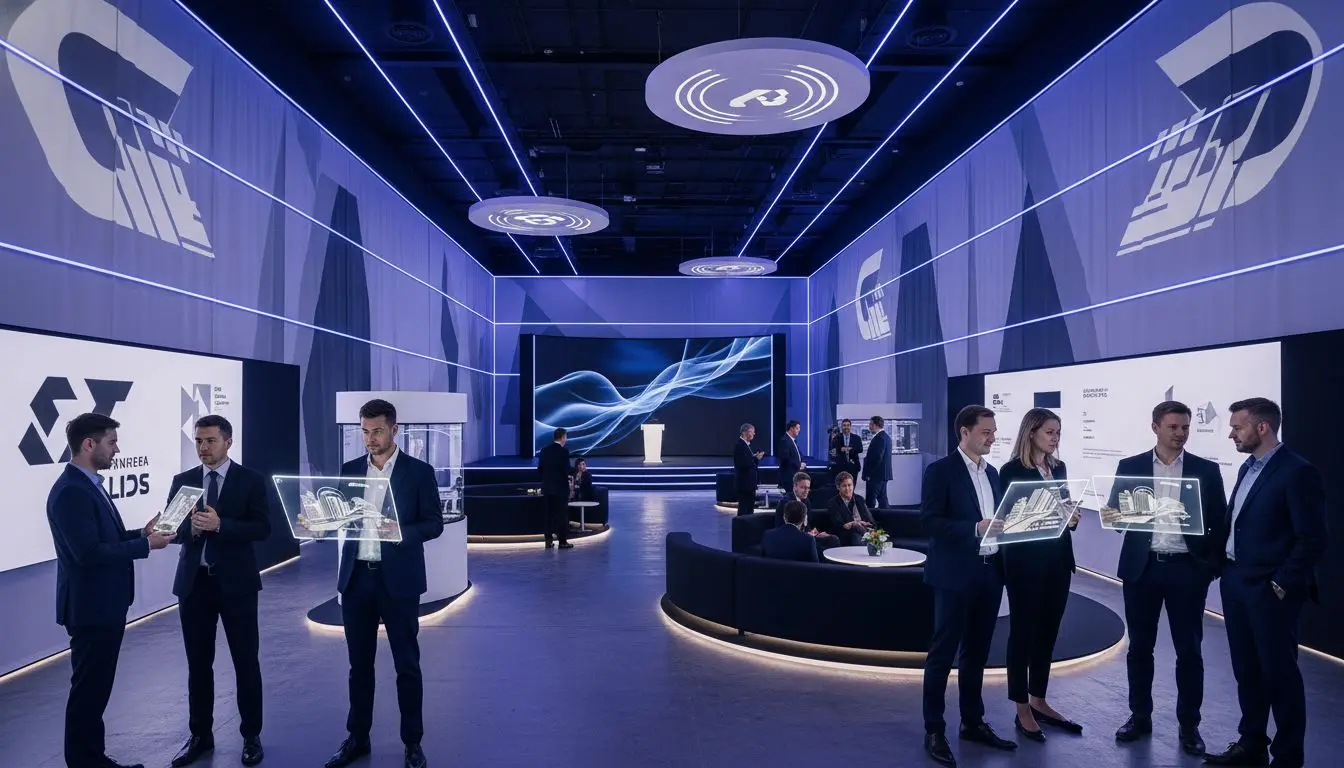
More than 80 percent of attendees decide whether an event resonates with them within the first few minutes. Today, design goes far beyond the visual and has become the key bridge connecting brands and audiences. Understanding how every detail influences the experience opens the door to much more memorable and meaningful events.
Table of Contents
- What Design Entails in Current Events
- Main Types and Styles of Design Applied
- Creative Process: From Research to Execution
- Impact of design on the assistant’s experience
- Common Mistakes and How to Avoid Them When Designing Events
Key Points
| Point | Details |
| Design as a Strategy | Event design is a comprehensive communication tool that creates emotional connections and memorable experiences. |
| Structured Creative Process | The creative process should Include research, conceptualization, and evaluation to ensure a cohesive and effective experience. |
| Impact on the Attendee Experience | A well-thought-out design generates emotional connection and lasting memory, transforming the event into a meaningful experience. |
| Common Mistakes | Avoiding visual overload and ensuring functionality are key to a successful design, while maintaining consistency with the brand identity. |
What does design in current events entail
Design in current events represents much more than simply creating attractive visuals: it is a comprehensive communication strategy that transforms the user experience and generates deep emotional connections. In a world where first impressions matter more than ever, design has become a universal language that communicates the essence and personality of a brand or experience.
Today, event design involves several fundamental elements:
Immersive Experience: Creating environments that completely envelop the participant
Visual Storytelling: Generating stories through graphic and spatial elements
Interactivity: Designing spaces and moments that allow for active participation by the attendee
Integrated Technology: Incorporating digital solutions that enhance the experience
Digital transformation has driven a revolution in event design, where the boundaries between the physical and the virtual are becoming increasingly blurred. It’s no longer just about decorating a space, but about building a multisensory experience that emotionally connects with the participants. Elements such as augmented reality, interactive interface design, and visual communication strategies have become essential tools for creating memorable events.
For creative teams like Mister Mikel, event design represents a unique opportunity to translate a brand’s identity into a tangible and immersive experience. The key is understanding that every detail counts: from the color palette to the layout of the spaces, everything communicates and generates a narrative that goes beyond the purely aesthetic.
Main Types and Styles of Applied Design
Contemporary event design encompasses a diversity of styles and approaches that allow for the creation of unique and memorable experiences. Each style responds to different communication objectives, audiences, and contexts, transforming spaces into visual narratives that go beyond simple decoration.
Among the main types of design applied to events are:
Minimalist Design: Characterized by simplicity, clean lines, and a limited color palette.
Industrial Design: Incorporating structural elements, raw materials, and a functional aesthetic.
Organic Design: Inspired by natural forms, textures, and colors that mimic the environment.
Futuristic Design: Utilizing technology, complex geometries, and high-tech elements.
The choice of design style depends directly on the brand’s identity, the message it wants to convey, and the experience it seeks to create. A corporate technology event, for example, might opt for a futuristic design with augmented reality elements, while a cultural festival might prefer an organic style that connects with naturalness and creativity.
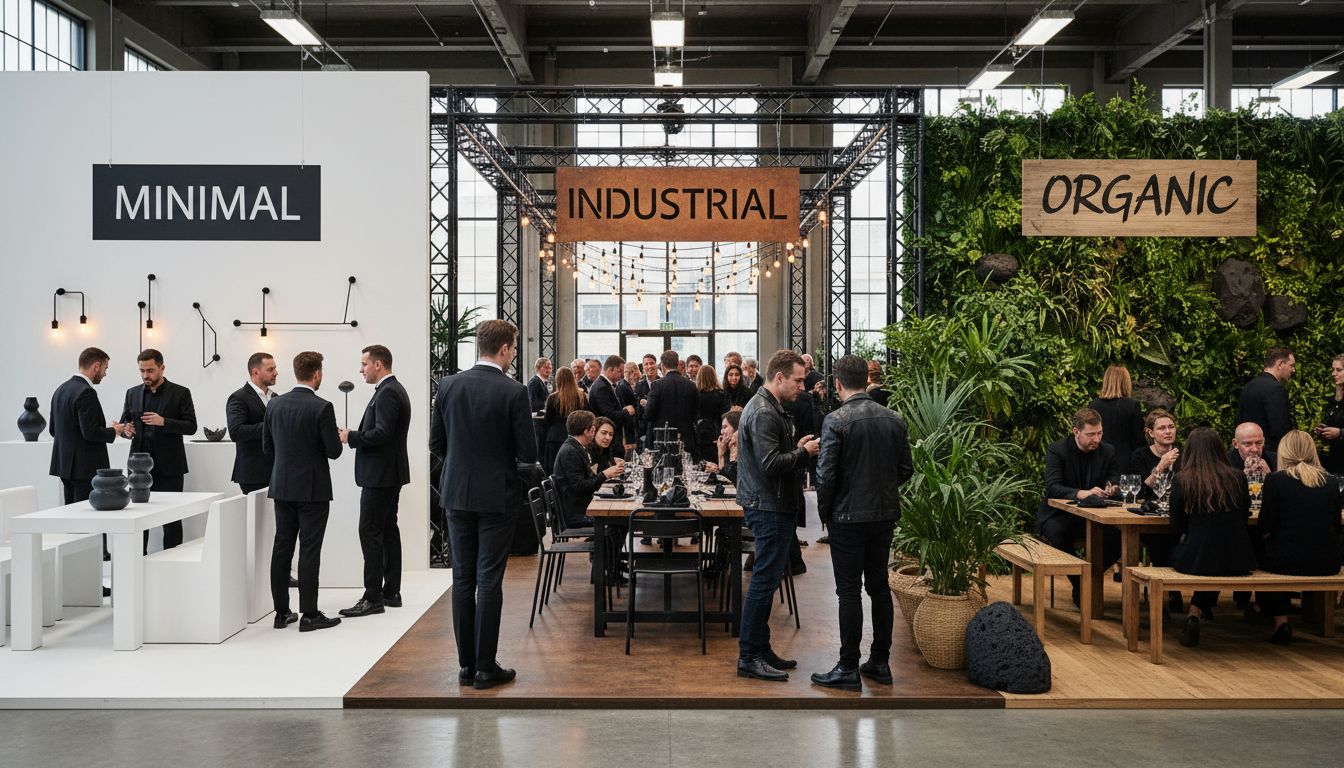
For creative teams like Mister Mikel, the key is understanding that each design style is a strategic communication tool. It’s not just about creating something visually appealing, but about building an experience that will resonate emotionally with the participants, transforming a simple event into a memorable sensory immersion.
Creative Process: From Research to Execution
The creative process in event design is a strategic journey that transcends simple visual planning, transforming into a systematic methodology that guarantees impactful and consistent results. This creative journey unfolds in meticulously structured stages, where each phase contributes to building a memorable and authentic experience.
The fundamental stages of this creative process include:
Research: Understanding the context, objective, and audience of the event.
Conceptualization: Developing the central idea and narrative of the design.
Planning: Defining specific strategies, resources, and elements.
Prototyping: Creating preliminary sketches and models
Execution: Implementing the design comprehensively
Evaluation: Analyzing results and making adjustments
The research phase is particularly critical. Here, insights are gathered about the brand, the target audience, current trends, and the specific objectives of the event. This stage allows for the generation of an accurate diagnosis that will guide all subsequent design decisions. Solid research means anticipating needs, identifying opportunities for innovation, and creating experiences that resonate emotionally.

For creatives like Mister Mikel, the creative process is not a rigid sequence, but a flexible and adaptive method. The key is to maintain constant communication, be open to feedback, and understand that each event is a unique opportunity to build a visual narrative that goes beyond aesthetics, connecting deeply with the audience.
Impact of Design on the Attendee Experience
Event design has become a powerful tool for emotional communication, capable of generating experiences that go far beyond mere visual aesthetics. The attendee experience is built through a careful orchestration of sensory, spatial, and narrative elements that generate deep and immersive connections.
Key aspects of design’s impact on the attendee experience include:
- Emotional Connection: Generating affective states through visual stimuli
- Spatial Orientation: Facilitating navigation and understanding of the environment
- Nonverbal Communication: Transmitting messages through visual elements
- Sensory Engagement: Activating multiple senses during the experience
- Experiential Memory: Creating lasting and impactful memories
Each design element acts as a point of contact that transforms the attendee’s perception, turning a simple event into a meaningful experience. Lighting, space distribution, materials used, color contrasts, and signage are not mere decorations, but strategic communication tools that guide, stimulate, and connect emotionally.
For creatives like Mister Mikel, the true success of design lies in its ability to generate an immersive narrative that transcends the visual, creating unique moments that resonate deeply with each participant. Design ceases to be a passive element and becomes the principal architect of the experience.
Common Mistakes and How to Avoid Them When Designing Events
Event design is fraught with subtle challenges that can quickly transform a promising experience into a complete failure. The complexity lies in the fact that many errors are not apparent until the event is underway, which underscores the importance of meticulous planning and a strategic vision from the outset.
The most frequent errors in event design include:
- Visual overload: Saturating the space with too many elements that create confusion
- Lack of coherence: Designs that do not reflect the brand identity or the purpose of the event
- Ignoring functionality: Prioritizing aesthetics over usability and comfort
- Poor spatial management: Inadequate layout that hinders flow and interaction
- Underestimating technology: Not integrating digital solutions that improve the experience
Every design mistake has direct consequences on the perception and engagement of attendees. The key is to maintain a delicate balance between aesthetics, functionality, and communicative purpose. A successful design must not only be visually appealing but also intuitive, accessible, and consistent with the overall objectives of the event.
For creatives like Mister Mikel, avoiding these mistakes requires a holistic approach that combines in-depth research, iterative prototyping, and constant communication with the client.
True mastery in event design lies not in creating something perfect, but in anticipating and mitigating potential points of friction before they occur.
Boost the success of your event with strategic and emotional design.
Event design faces challenges such as the need for an immersive experience, visual consistency, and the functional integration of technology to capture the attention and hearts of attendees. If you’re looking to avoid common mistakes like visual overload or a lack of emotional connection, it’s essential to have a creative partner who can transform every detail into an unforgettable narrative.
With Mister Mikel’s expertise, you gain access to a team that integrates research, planning, and execution to create events with real impact. Discover how our collaborative and strategic approach can transform your ideas into unique spaces that resonate with your audience. Don’t let your event go unnoticed. Start designing a standout experience today by visiting Mister Mikel and let us help you transform your brand every step of the way.
Frequently Asked Questions
What is the importance of design in events?
Event design is crucial because it not only creates a visually appealing environment, but also transforms the user experience by generating deep emotional connections and communicating the essence of a brand.
What elements are considered in current event design?
Current event design includes immersive experience, visual storytelling, interactivity, and technology integration, all of which work together to enhance the attendee experience.
How is the creative process developed in event design?
The creative process in event design takes place in several stages: research, conceptualization, planning, prototyping, execution, and evaluation, ensuring that objectives are met and feedback is considered.
What are the most common mistakes when designing an event and how to avoid them?
Common mistakes include visual overload, lack of coherence, ignoring functionality, poor space management, and underestimating technology.
To avoid these pitfalls, it’s essential to maintain a balance between aesthetics and functionality, as well as meticulous planning.